• Skip to main content
  • Skip to primary sidebar

Feast & Lore

Food stories featuring heritage recipes and new experiments.

  • Home
  • Recipes
  • About

Archives for March 2018

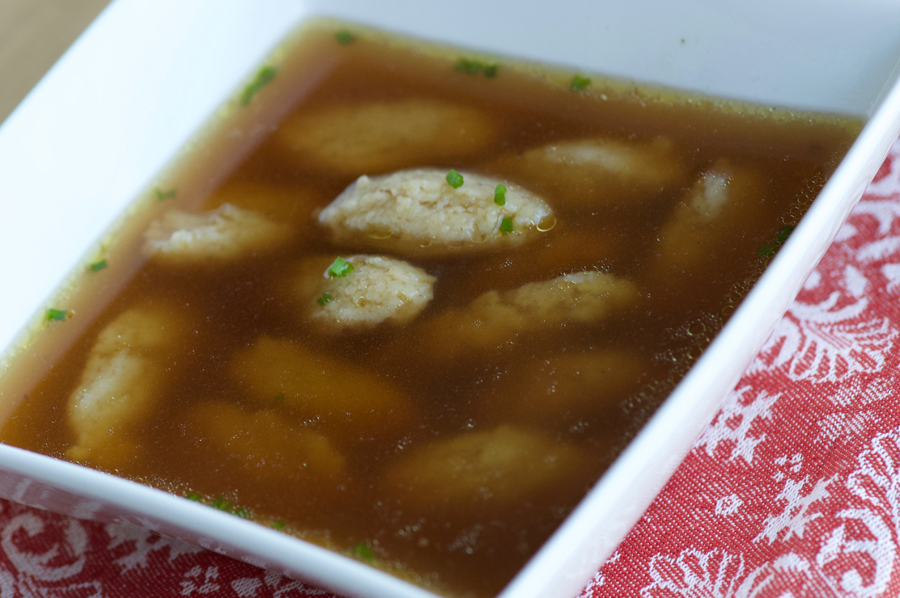
Beef Bone-broth with Cream of Wheat Dumplings

March 18, 2018 By Caroline 7 Comments

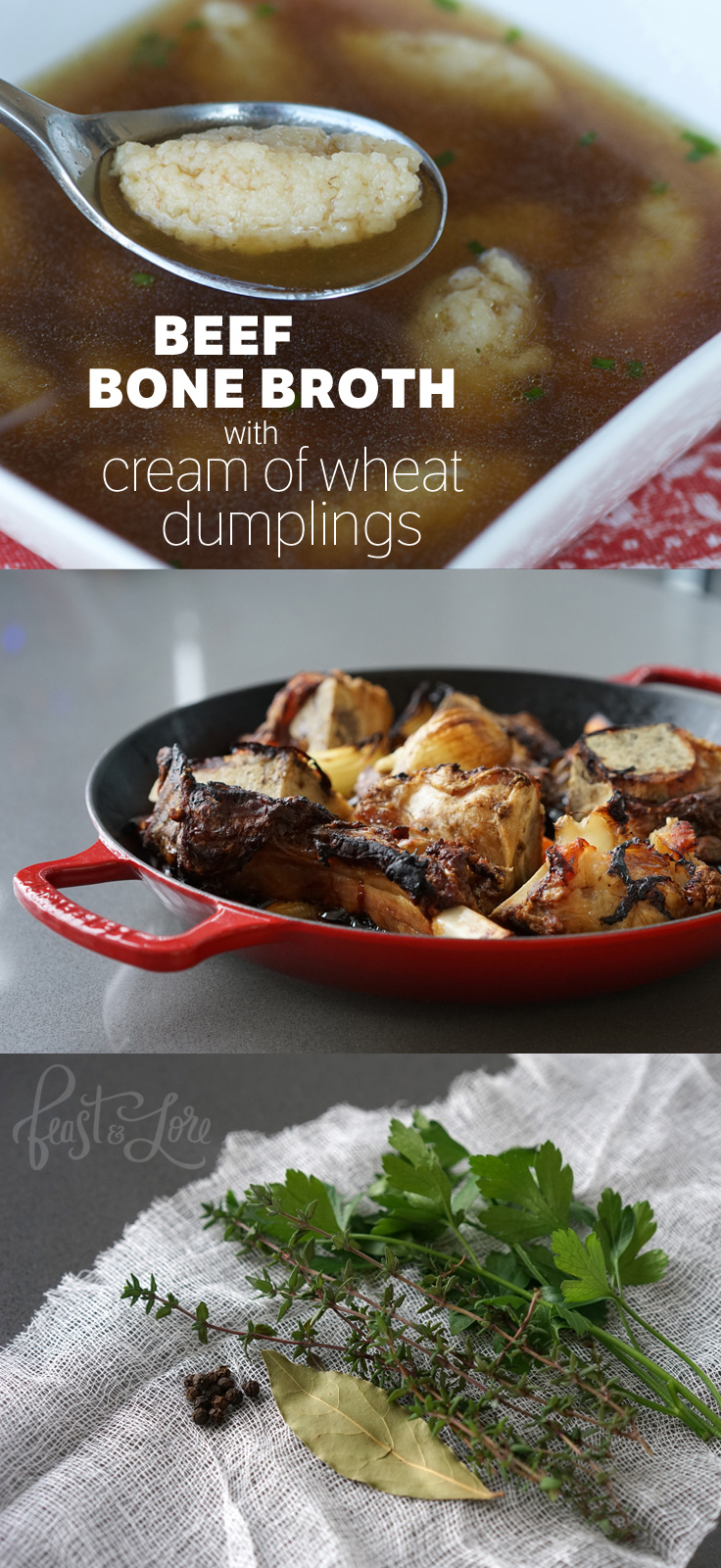
Rich and savoury beef broth with fluffy cream of wheat dumplings add up to pure comfort in a bowl. This recipe packs a two-for-one punch: make the broth recipe, use part of it for the dumpling soup, and then freeze the rest to use later as your very own personal stash of beef stock. It will do wonders for pan sauce, add body to gravy and is so much better than using canned broth.
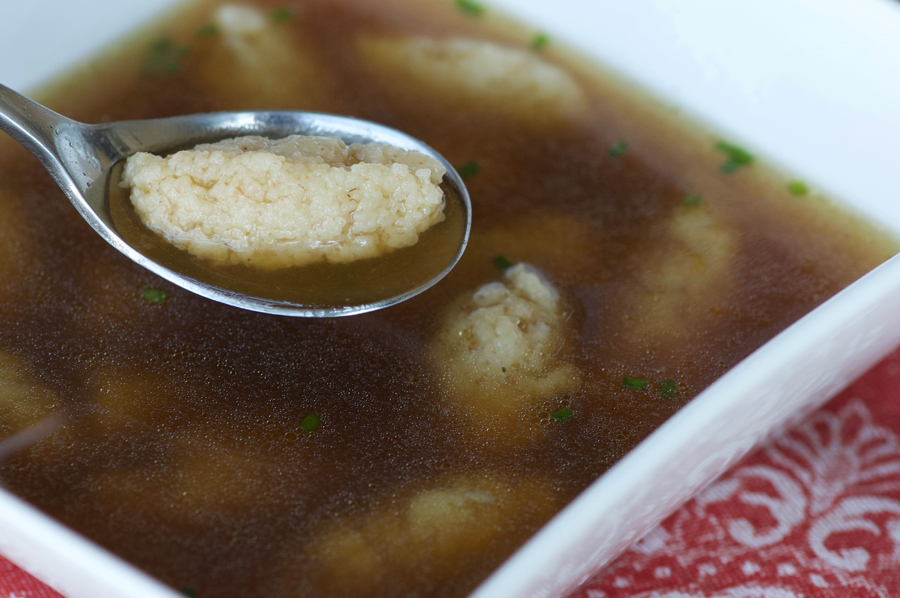
Beef Bone Broth Soup with Cream-of-Wheat Dumpings

There is something very satisfying about taking a cheap bag of bones from the butcher shop and turning them into a delicious, healthy broth. Making bone-broth changed me. Now I look at bones from roasts, steaks, etc as possible additions to my next bone broth—I simply carve off most of the meat (leaving a bit on helps flavour the broth) and freeze the bones, saving them up until my next batch.

While bone broth has been trending these days as a source of collagen and minerals, Grandmothers everywhere have been making it for decades, and for good reason. The nice thing is you really don’t have to worry too much about exact measurements when it comes to making homemade broth. Work with as many bones as you can fit into your stock pot, top with water, add a few veggies and flavourings and let it all simmer for hours.

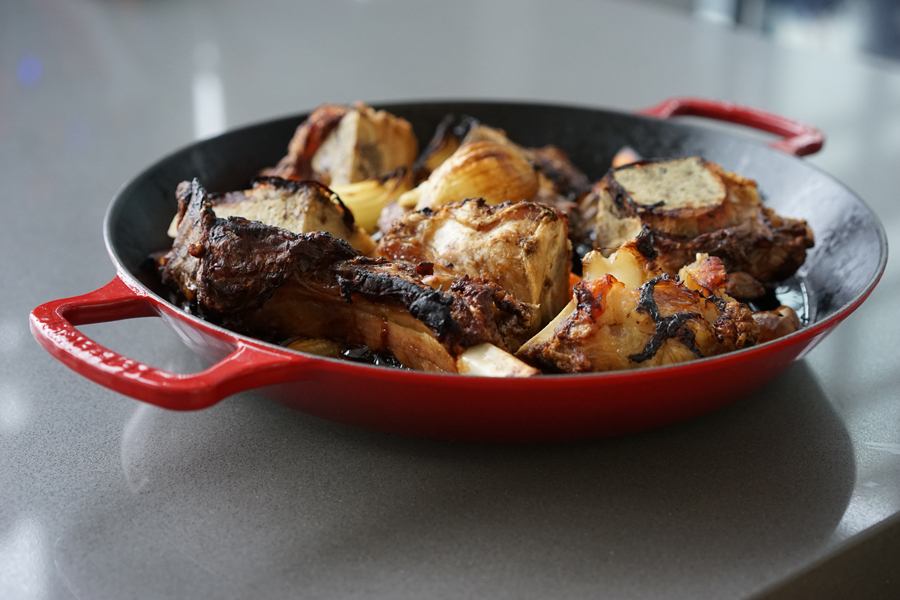
To extract maximum flavour from the bones, roast them in the oven first. This will provide crisp, darkened bits of flavouring to enhance your broth. I add the carrots and onions to bring out their sweetness as well. The roasting pan will emerge an hour later, crackling, sizzling and full of lots of browned bits.
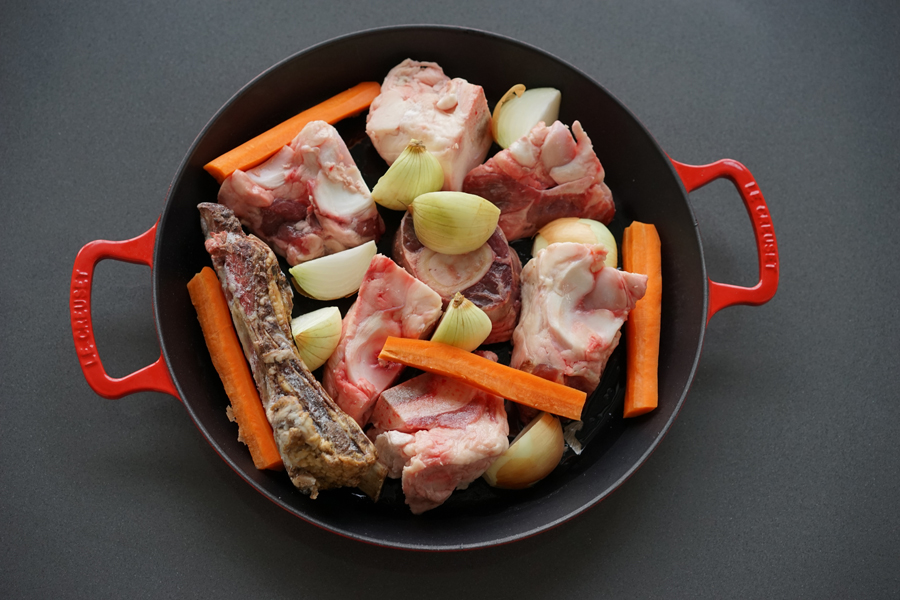
Beef bones in a roasting pan with a few veggies

Beef bones roasted for bone-broth

While the bones are roasting, grab a few herbs (don’t overdo it, you don’t want to overly flavour the stock but just add a few subtle notes). Wrap them in a cheesecloth bundle and tie with kitchen twine, so they won’t fall apart during the hours of simmering to follow. This little package is also known as a “bouquet garni.”

Prep a bundle of herbs in cheesecloth to flavour broth

Once you’ve roasted the bones, remove them from the roasting pan and place them in a large stockpot. Add water to the roasting pan and scrape up the browned bits at the bottom of the pan (this process is similar to the early steps of making gravy). The water will take on a lovely deep golden hue as you pull up all the flavour from the roasted bones and veggies. Once you’ve scraped it all up, transfer the water and any browned bits to the stockpot. Add the bouquet garni, celery, and top with water to fully cover the bones.
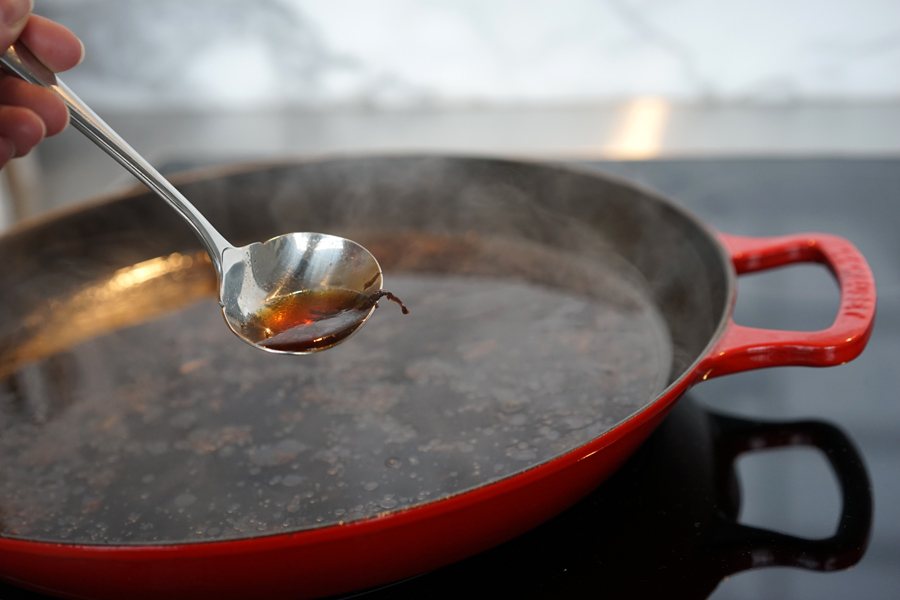
Deglazing Extracts Flavour from Bone-Broth

At this point, you can pretty much walk away, simmering the pot for hours, checking on it every hour or so to stir things up a bit. I simmer my broth uncovered to condense the flavours. It saves space in the freezer and I just add water back in as needed when I’m ready to cook with it.
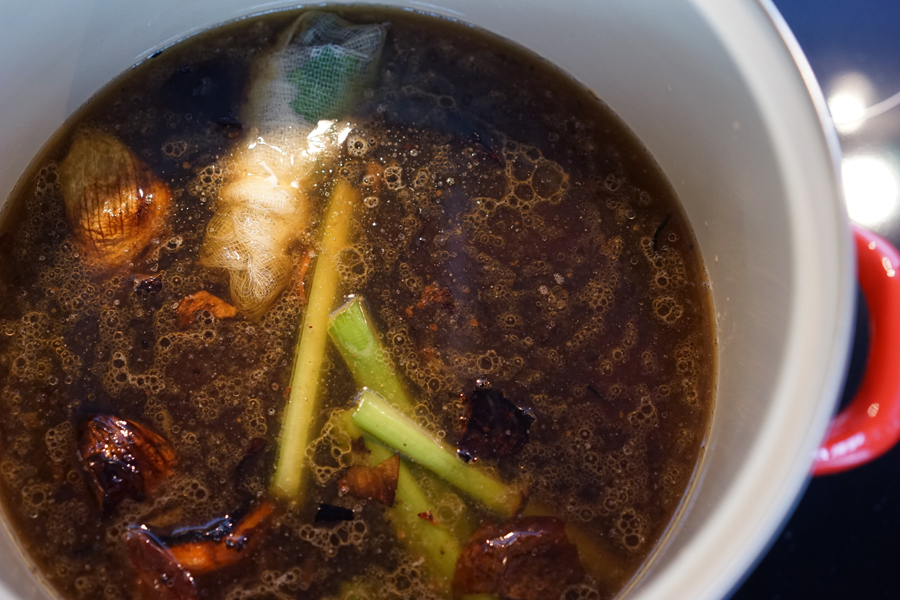
Everything in the stockpot

Once done (five hours should be plenty of time but you can simmer a bit longer if you like) remove the bones and meat from the pot. (if you have a dog, they will go crazy for the soup meat (which you should remove from the bone before giving to them so they don’t choke on any bone pieces). Otherwise, it tends to be pretty flavourless after all that cooking and can be discarded.) Strain the stock into a separate container to remove any small bones or pieces so you are left with simply the pure, clear broth. Ideally, allow this to cool and place in the fridge overnight. This step will cause the fat to solidify at the top of the broth so you can easily lift it out in one piece and discard it. Otherwise, if you don’t want to wait, skim the fat from the top by hand before adding to any recipes.

With the fat skimmed off of the broth, one trick to freeze it is to use an ice-cube tray to freeze into 1-2 tablespoon cubes. You can freeze these in a ziplock baggie to drop into sauces, gravies etc. You can also use larger ziplock containers depending on how you plan to use it later. Remember to add a label with what it is and the date you made it!

Now, on to the Cream of Wheat Dumplings! These are based on a classic style of dumpling originating in Austria, known as Griessnockerl. Traditionally, I believe these were made with Semolina flour, however I use Cream of Wheat which is more readily available and makes for a nice, fluffy dumpling.

These are super easy. Start with room temperature butter, an egg, and some salt. Mix with a fork until the mixture is lumpy and looks like the photo below.
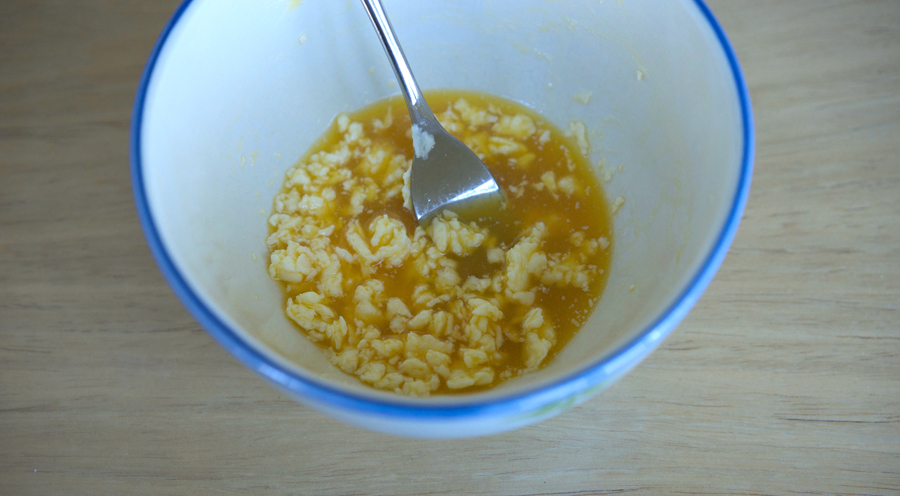
Make Dumplings Mix Egg Butter Salt

Next, add the cream of wheat and combine well with a fork, stirring and pressing for about one to two minutes. The mixture will be smooth and fairly firm. It should sit for ten minutes before you cook it. I once left it out for an hour causing it to get too soft. Then when I went to add it to the soup, it all fell apart. So don’t leave it for too long. Ten minutes is perfect. While it’s resting, heat up your beef bone broth and water. Add a bouillon cube and bring to a boil. Do a taste test for salt and flavour levels—usually I find more salt is needed. When the broth tastes right, and the dumpling batter is ready to go, it’s time to shape those dumplings!
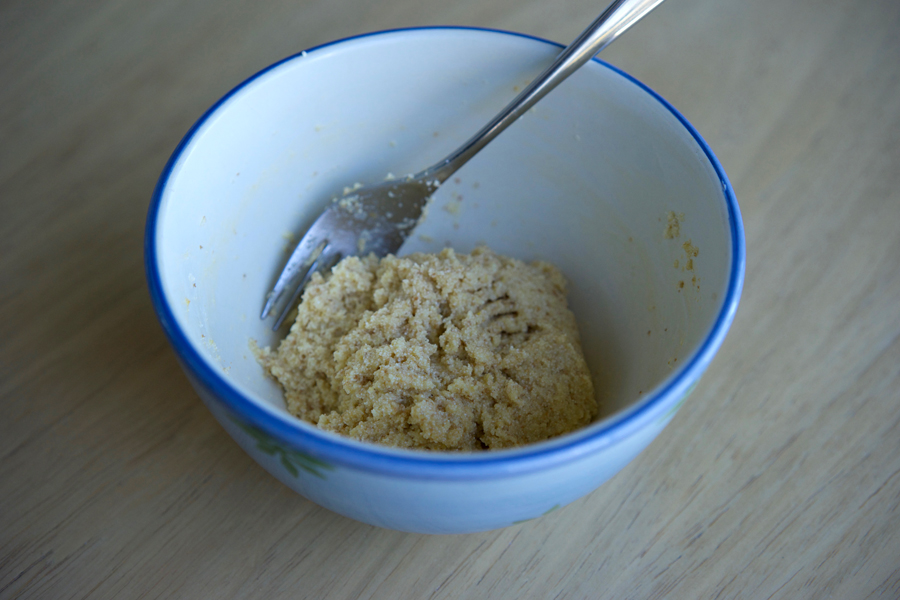
Make Dumplings add Cream-of-wheat

This step takes a bit of practice. Use two spoons (very small spoons, ideally, as these dumplings will easily double in size while they cook). Pick up about 1/2 teaspoon of the dumpling batter in one spoon. Use the second spoon to shape into an oval shape, pressing the dumpling together. Drop into the soup, and keep going until all of the dumplings are done.

A few notes to avoid any issues with the dumplings falling apart (which so far has only happened to me once!)

  • Use room temperature, not melted, butter for your batter
  • Allow the batter to rest for ten minutes before you start to shape the dumplings—but not much more than fifteen minutes, to avoid the batter becoming too soft.
  • Don’t have the broth at a rolling boil when dropping the dumplings in, keep it at a gentle simmer.
  • Shape the dumplings fairly tightly so they hold together well. If they are too loose they might fall apart in the broth.

Depending on how large you made them, the dumplings usually take about ten to fifteen minutes to cook. They will float to the top when they are close to being done. Test one first, by cutting through it. The inside should be a uniform consistency. If the centre is still hard, you need to cook them a bit longer.
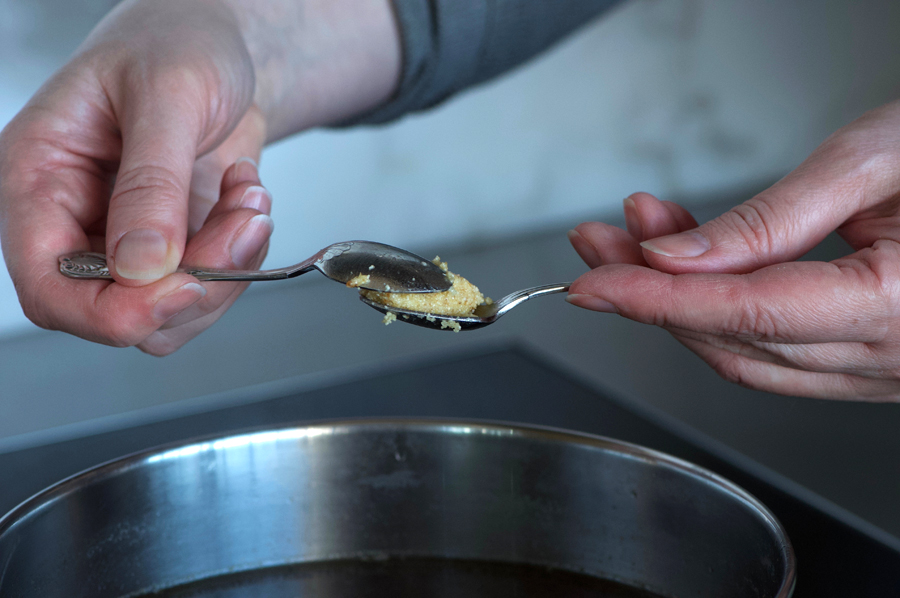
Use two small spoons to shape dumplings

Serve sprinkled with freshly chopped chives. Some Maggi (seasoning sauce) at the table is always a good idea too in case anyone wants a bit more flavouring in their soup. A nice appetizer before a meal, or as a light lunch, this soup is both comforting and delicious!
Beef Bone-Broth Soup with Cream of Wheat Dumplings

Beef Bone Broth Soup with-Cream-of-Wheat Dumpings
Print

Beef Bone-broth with Cream of Wheat Dumplings

A beautiful savoury beef broth full of natural collagens with fluffy cream of wheat dumplings. A traditional Austrian soup often served as a first course.

Course Appetizer
Cuisine Austrian
Servings 4

Ingredients

Beef Bone Broth

  • 2-3 fresh parsley sprigs
  • 2 fresh thyme sprigs
  • 1 Bay leaf
  • 5 black peppercorns
  • 4-5 lb meaty beef shanks/bones
  • 1 meaty veal shank
  • 2 onions: peels on, quartered
  • 1 large carrot, quartered
  • 2 ribs celery, quartered
  • water to cover bones
  • 1 1/2 tsp salt

Cream of Wheat Dumplings with Beef Bone Broth

  • 4 cups beef broth
  • 2 cups water
  • salt to taste
  • 1/2 beef boullion cube
  • 2 tbsp softened unsalted butter
  • 1 egg
  • 1/2 tsp salt
  • 1/2 cup cream of wheat
  • chopped chives to taste

Instructions

Beef Bone Broth

  1. Preheat oven to 450°. Spread bones, veal shank, onion and carrot in a roasting pan. Transfer to the oven and roast until dark brown in places, about one hour.

  2. Make bouquet garni: wrap herbs, Bay leaf and peppercorns in a cheesecloth and tie with kitchen twine.

  3. Transfer the roasted bones and veggies into a large stockpot. Add approximately two cups of water to the roasting pan, scraping up browned bits from the bottom. If you roasting pan is stovetop-safe, heating it on the stove may help loosen more bits. Add to stockpot with celery pieces. Top pot with water until bones are covered, and bring to a boil. Add salt. 

  4. Froth will develop at the top of the stock, especially during the first hour. Skim and discard the foam. Simmer gently uncovered for five to seven hours. Remove large bones and pieces from the pot and discard. Strain the broth through a fine sieve. Cool and refrigerate overnight to allow the fat to solidify at the top, remove. Transfer to storage containers and freeze/use as needed.

Cream of Wheat Dumplings with Beef Bone Broth

  1. Heat beef broth and water, add bouillon and taste and adjust seasoning as required. Bring to a gentle simmer.

  2. In a small to medium bowl beat egg. Add butter and salt, and combine well with a fork. Add cream of wheat and mix well with a fork, pressing to combine ingredients. Allow to rest for ten minutes.

  3. Using a very small teaspoon, take 1/2 tsp of batter and use a second spoon to shape it into an oval dumpling, pressing together. Drop into the broth. Continue with the rest of the batter. If your spoons get sticky, drop into the broth between shaping.

  4. Keeping the broth at a light simmer, cook the dumplings until they float to the top, about ten minutes. Check to see if they are done: cut one if half and see if the centre is consistent. Taste—if the middle is hard, cook for an additional five minutes or so. Serve topped with finely chopped fresh chives.
Rich and savoury beef broth with fluffy cream of wheat dumplings add up to pure comfort in a bowl.

Filed Under: Pleb Feasts, Recipe, Soup Tagged With: austrian, beef, Bone-Broth, Bones, Cream of Wheat, dumplings, German, Griessnockerl, soup

Italian Potato-Sausage Soup

March 11, 2018 By Caroline 5 Comments

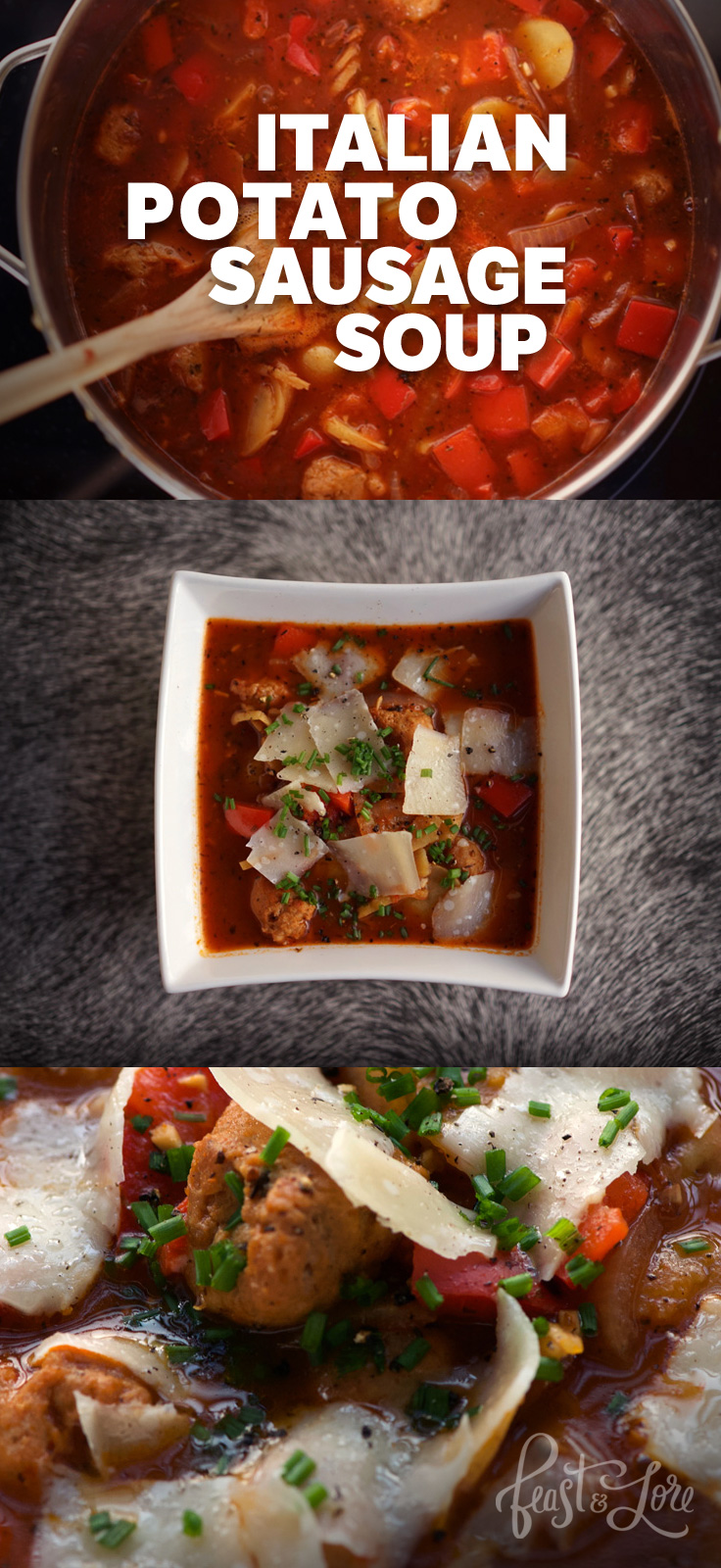
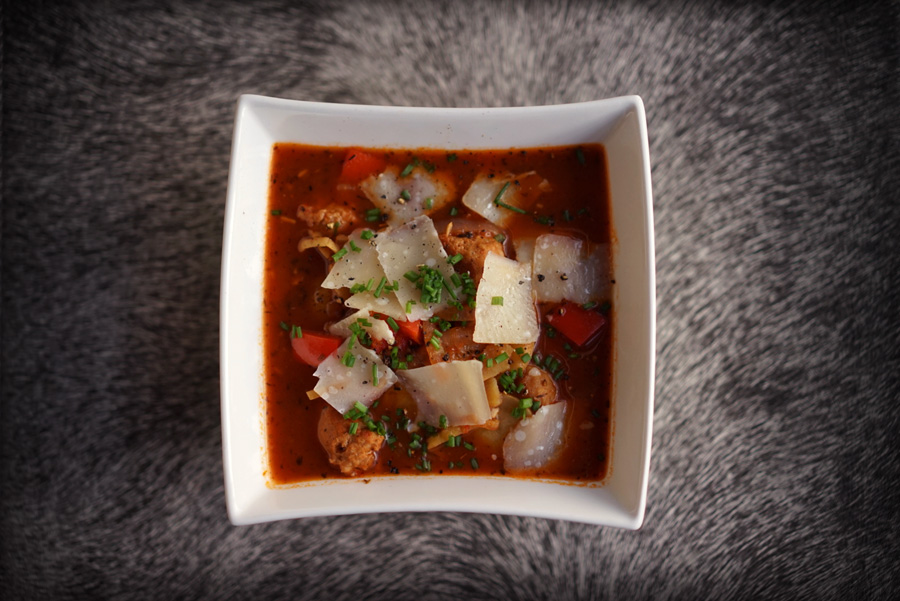
A hearty meal with a healthy dose of veggies, this Italian Potato-Sausage Soup is one of the first recipes I ever made. I remember the first time I tried it, I confused a clove of garlic with a head of garlic, so I used 2 whole heads of garlic by mistake! The result, while rather pungent, actually wasn’t half bad 🙂 I learned my lesson for next time and it’s been a favourite dish for over twenty years now! The sausages give the broth a wonderful spicy flavour complimented by the fresh red peppers. Topped with shaved Parmesan cheese and some chives, it comes together quickly for a delicious lunch or dinner.

Italian Potato Sausage Soup with Red Peppers

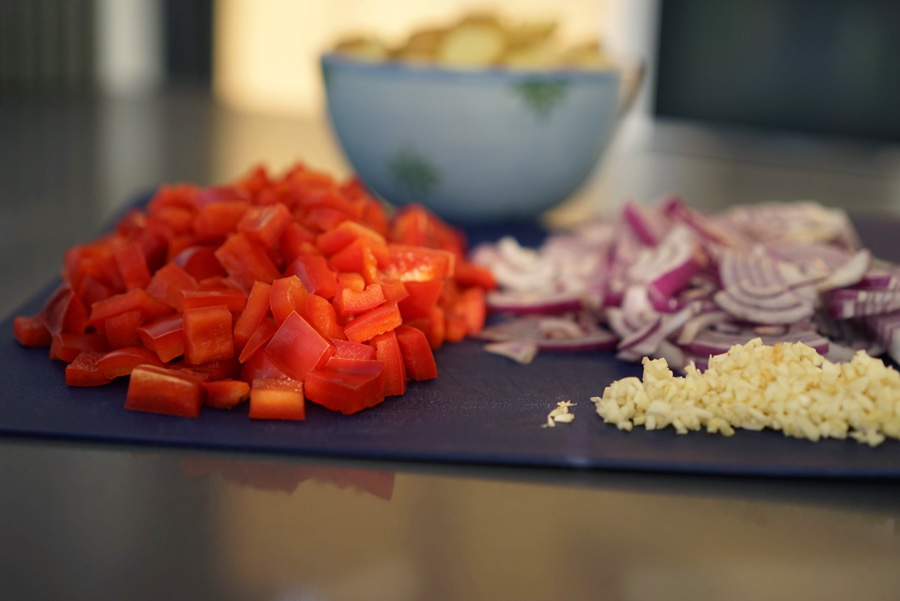
The original recipe came from a book I had picked up, 30-minute Meals from the Academy. An oldie but a goodie, this book has lots of simple recipes that are easy to pull together and taste great. The book put an emphasis on the mise-en-place method of prepping and cutting all of your ingredients before beginning to cook anything. This was an important lesson to learn when I first starting out—I still remember frantically trying to keep up with prepping ingredients while cooking because I hadn’t thought through how long the prep work would take (and being a newbie in the kitchen, I wasn’t exactly sous chef material!) True to the book, I still prep and chop everything for this recipe before getting started on the stove.

Mise en place - prep all your veggies in advance

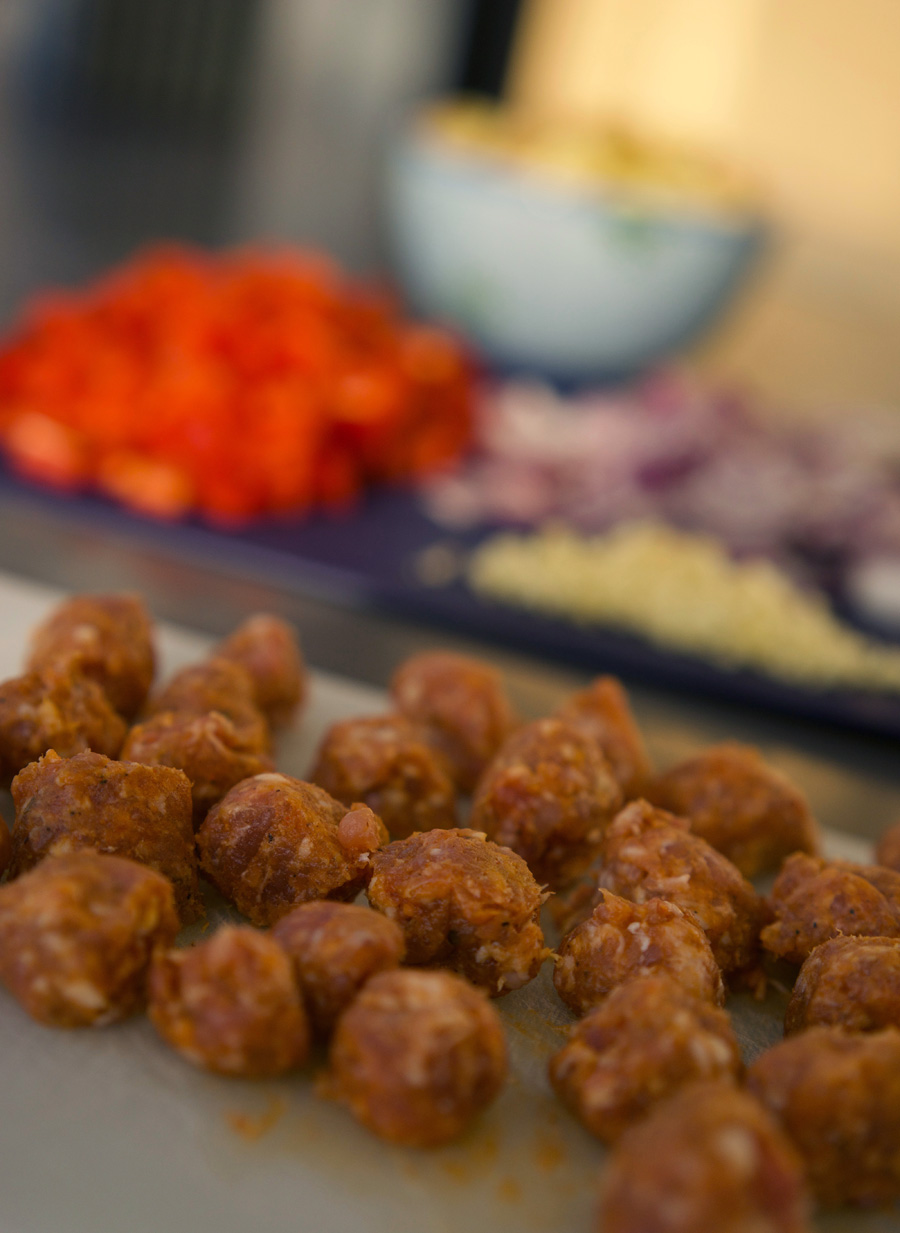
It’s worth noting that the quality of sausages you buy will greatly affect the final dish. Rather than the basic grocery store sausages that can be very fatty and overly salted, I go to a good quality butcher offering house made, smaller-batch sausages instead. I find they tend to be much leaner and the spices and overall flavour is so much better. They freeze well, so you can always buy enough for several recipes to avoid too many special trips to the meat shop. I adapted the recipe to include the extra step of removing the sausage casings. It only takes a couple of extra minutes and makes the sausage pieces more meatball like. I also found that while the larger piece sizes recommended for the veggies look quite gourmet, they are hard to manage and not very user-friendly while eating. Instead I go with bite-size pieces that fit easily into a spoon—no extra cutting/wrangling required while eating!

Remove italian sausage casings and cut into meatballs

The sausages start off steaming in a small amount of water, then the water is drained and they are browned on all sides. Once brown, the sausages are removed from the pot and set aside. Olive oil is added, and the veggies are sautéed. I start with the onion, followed by garlic, seasoning and potatoes. I add the red peppers near the end as I like them to remain just a tiny bit crisp. Once the veggies are just slightly golden in places, it’s time to add the broth and tomato paste. The reserved sausages go back in, too.

Saute Garlic, Onions and Vegetables

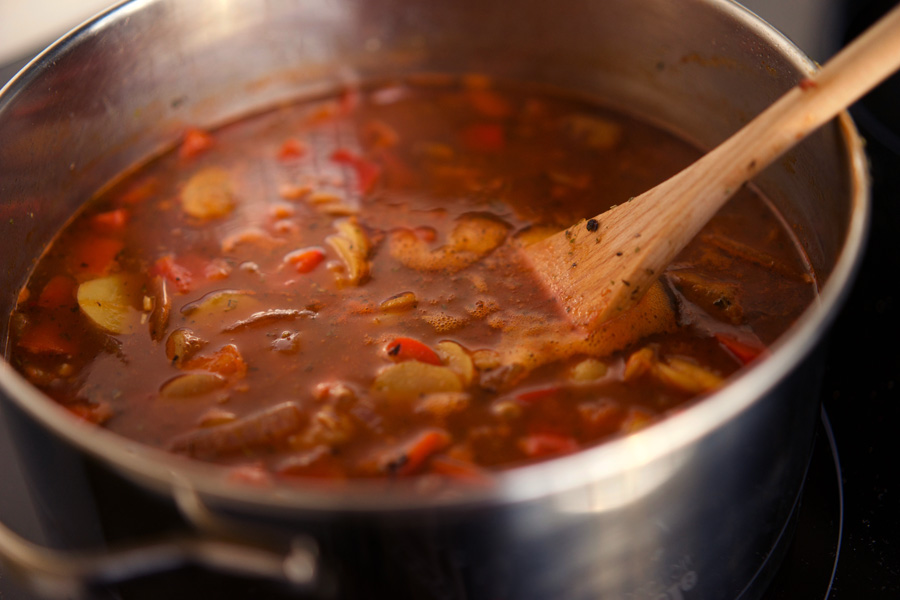
At this point you just need to cook everything for about 15 minutes or so, until the potatoes are soft and cooked through. Do a taste check for salt and pepper, adding more if needed. A nice crusty baguette with butter on the side round this out for a tasty dinner or hearty lunch.

Add broth and tomato paste and cook soup

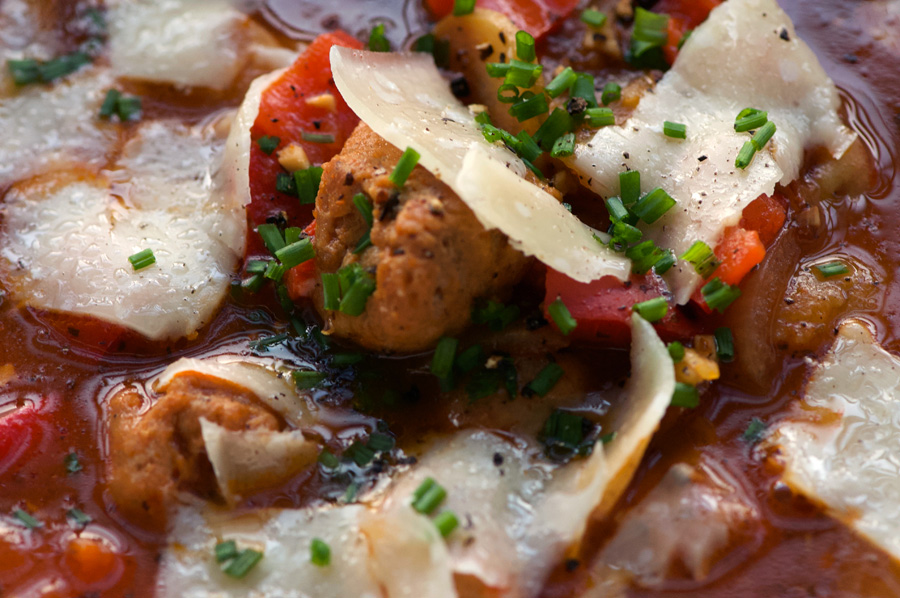
To serve, ladle into bowls and top with shaved parmesan pieces and some chives or green onions. Twenty years later, I still make this regularly and it’s a real crowd pleaser. This recipe is a keeper and I hope to make it for another twenty years.

Italian Potato Sausage Soup Topped with Parmesan Cheese

Hearty and delicious, a tomato broth with lot of fresh vegetables and sausage
Print

Italian Potato Sausage Soup

A hearty soup loaded with bright red peppers, garlic, potatoes and sausage that is quick and easy to make.

Course Main Course
Cuisine Italian
Prep Time 20 minutes
Cook Time 20 minutes
Total Time 40 minutes
Servings 5 people

Ingredients

  • 3 Italian Sausages
  • 1/2 cup water
  • 2 tbsp olive oil
  • 1 small red onion, quartered and sliced
  • 550 g baby potatoes, thinly sliced
  • 3 cloves garlic, minced
  • 1 tbsp Italian Seasoning
  • 2 red peppers, cut into bite-sized pieces
  • 156 ml tomato paste (5.5 oz)
  • 900 ml chicken broth (30 oz or 4 cups)
  • salt to taste
  • freshly ground pepper to taste
  • handful of chives, diced
  • Parmesan cheese, shaved

Instructions

  1. Trim, chop and prep all ingredients. Remove casings from sausages and cut into 1" pieces, forming little sausage meatballs.

  2. In a large covered pot over medium-high heat, simmer sausages in 1/4 cup water for four minutes. Drain water, increase heat, and brown sausages on all sides (for about five minutes). Remove sausages and set aside.

  3. Heat olive oil in pot. Add onions and sauté for four minutes. Add garlic, potatoes, Italian seasoning and salt and pepper to taste. Cook for another five minutes. Add red peppers and cook for two minutes.

  4. Add tomato paste, broth and reserved sausages. Bring to a boil and simmer for fifteen minutes, until potatoes are softened and cooked through. Test for seasoning and add more salt if needed.

  5. To serve, ladle into bowls and top with shaved Parmesan, freshly ground pepper and diced chives.

Zesty tomato broth with red peppers, potatoes and sausages

Filed Under: Main, Recipe Tagged With: Garlic, Italian, Parmesan Cheese, potato, Red peppers, Sausage, soup, Tomato

Citrus Beet Salad with Fennel and Pumpkin Seed Oil

March 4, 2018 By Caroline

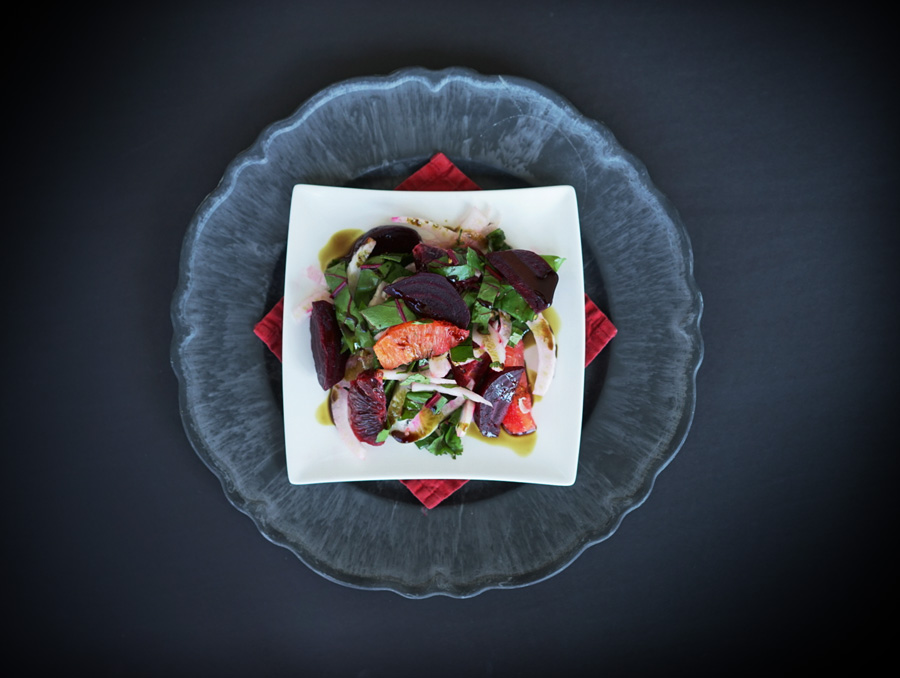
Gorgeous jewel-tones, earthy beets, licorice-scented fennel and citrus bursting with flavour—this salad brings it all together. But what really makes this special and takes it over the edge is the Styrian Pumpkin Seed Oil. Made in the Austria in the region of Styria, the oil has a distinctive nutty, rich taste with a deep green hue. Styrian Pumpkin Seed Oil is made from a unique pumpkin variety that produces seeds without shells. These seeds produce rich oil with a darker green colour when compared with regular pumpkin seed oil. It tastes amazing drizzled over salads and should not be used for cooking or heating—it is meant to be enjoyed straight up.

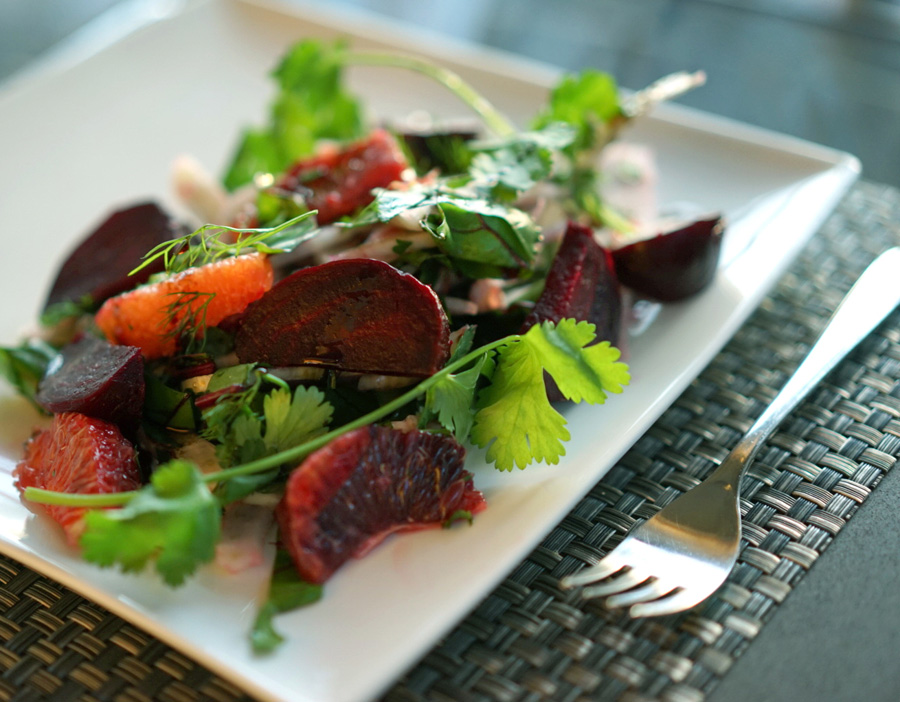
Citrus Beet Fennel Salad with Pumpkin Seed Oil

I was introduced to the idea of the venerated Pumpkin Seed Oil by long-time family friends, Frank and Etta. With a twinkle in his eye, Frank leaned over during dinner and asked me, “Have you ever tried Austrian Pumpkin Seed Oil?” I had to admit I had not only never tried it, I’d never even heard of it. He explained it is very rare and hard to find in Canada, but in Austria where he was from, it was a celebrated condiment to be used on everything from ice-cream to salads to cheese. He spoke of it with such nostalgia and affection, it left an impression on me.

Imagine my delight when I found a tin of the precious oil at my regular grocery store! It is touch and go and not always available there, but I’ve also seen it at a few gourmet food shops in Toronto and noticed you can order it online via Amazon as well. It is very expensive, but truly unlike any other oil I have ever tasted. It carries a nutty taste with more richness and greater intensity than that of Walnut oil. It complements the earthy roasted beets and serves as a lively rich counterpoint to the citrus in this salad.

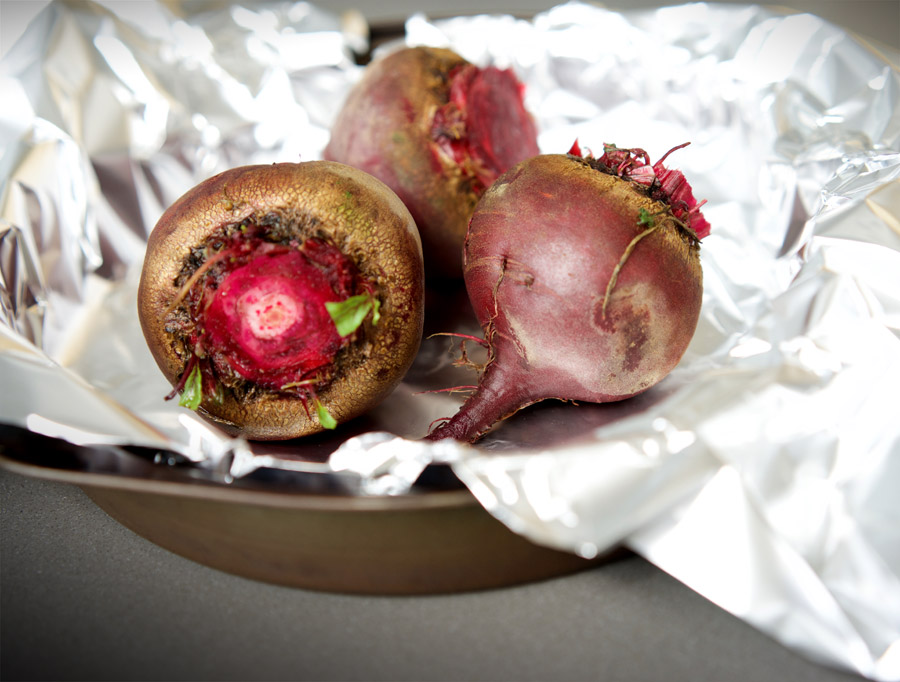
To begin, trim, rinse and chop the beet greens into ribbons, and set aside. Wrap the beet roots in foil and roast in a preheated 400° oven for about an hour until tender. Allow to cool, then peel the beets and slice each one into 8 wedges.

beets in foil ready to be roasted

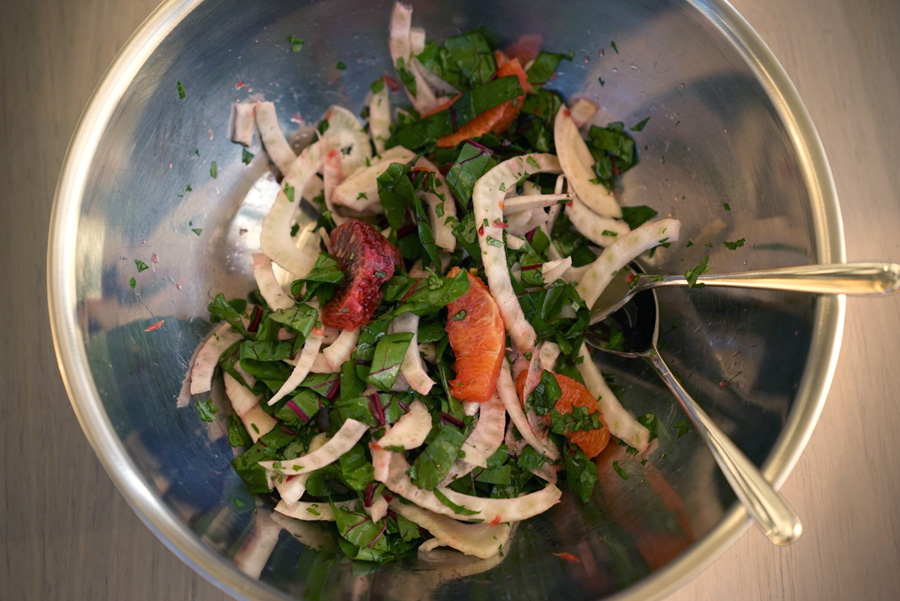
Trim and slice about half of a large fennel bulb into strips, and place in a large bowl. Add the reserved beet greens and chopped cilantro. Drizzle freshly squeezed orange or lemon juice over the salad with a pinch of sea salt and freshly ground pepper. Toss to combine.

Toss Citrus Beet Fennel Salad

Cut peel and pith from the oranges and slice into segments, adding them to the bowl. Stir gently to avoid breaking the fruit. Plate the salad, and drizzle a generous amount of Styrian Pumpkin Seed Oil over the plates just before serving.

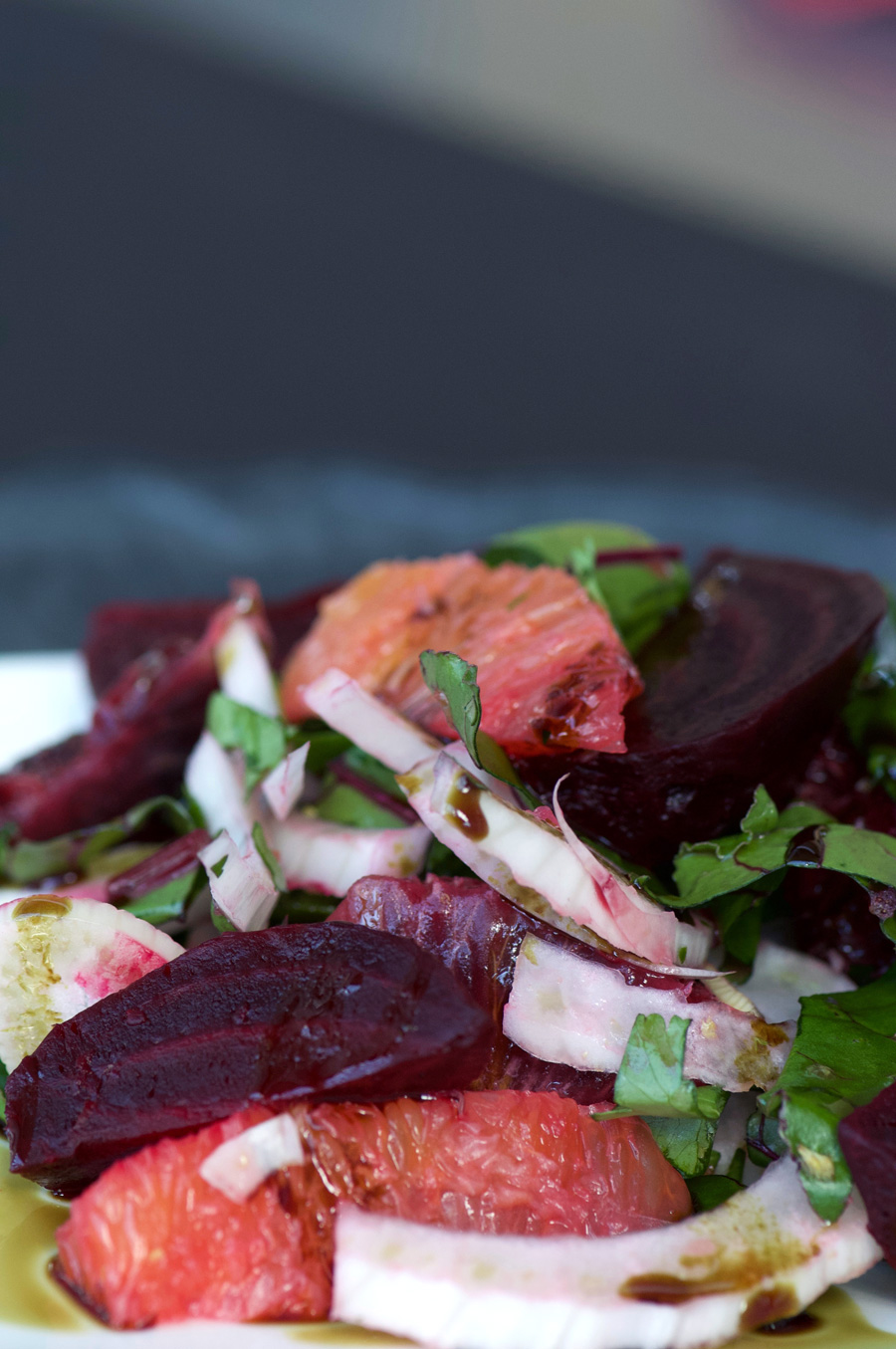
Close up of citrus and beets with fennel

Earthy, roasted, sweet, sour and nutty—this delicious salad is a feast for the eyes. A beautiful dish that’s great to share with guests, yet easy enough to make for a weeknight side salad.

From time to time I find myself leaning over, speaking in a hushed voice to a foodie friend, “but have you tried real handcrafted Styrian Pumpkin Seed Oil?” I’m a Pumpkin Seed Oil convert now, seeking to impart the sense of reverence and love for this special liquid of greenish golden hues as Frank did for me.

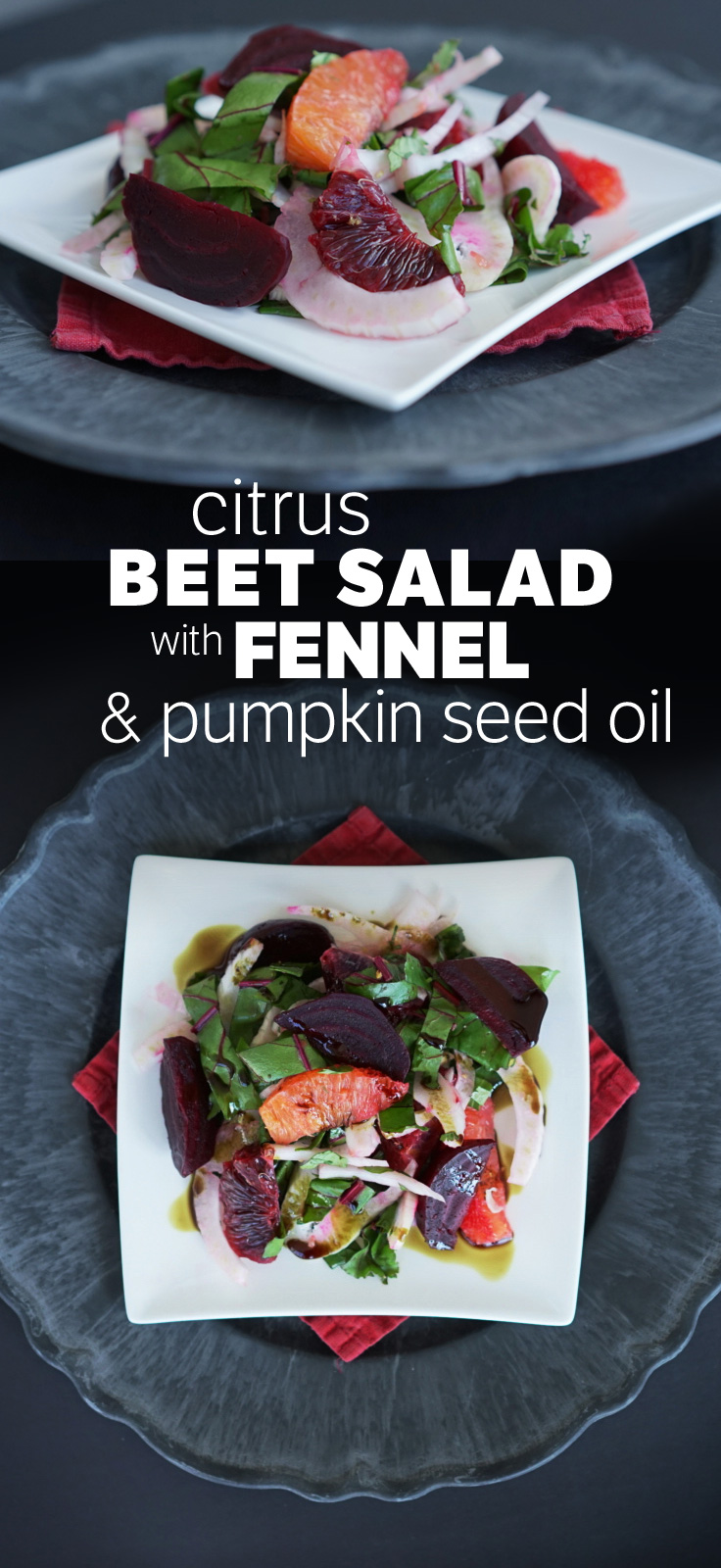
Orange Beet Fennel Salad

Citrus Beet Fennel Salad with Styrian Pumpkin Seed Oil
5 from 2 votes
Print

Citrus Beet Fennel Salad with Styrian Pumpkin Seed Oil

Bursting with flavour and gorgeous jewel tones, this salad drizzled with nutty Pumpkin Seed Oil is a feast for the eyes and palate.

Course Salad, Side Dish
Cuisine Austrian
Prep Time 20 minutes
Cook Time 1 hour
Servings 4

Ingredients

  • 3 beets with greens
  • 1 naval orange
  • 1 blood orange
  • 1 tbsp fresh orange or lemon juice
  • 1/2 large fennel bulb, sliced
  • chopped cilantro to taste
  • sea salt
  • fresh ground pepper
  • Styrian Pumpkin Seed Oil

Instructions

  1. Prepare beets: remove greens, rinse, dry and chop into ribbons. Set aside. Clean beet roots, and wrap in foil. Add to a preheated 400° oven and roast for 1 hour, until tender. Allow beets to cool, then peel and slice each beet into 8 wedges. Set aside.

  2. In a large bowl, combine sliced fennel, beet greens, cilantro, salt, pepper and juice. Remove peel and pith from the oranges and slice into segments. Add to the salad bowl and toss gently. 

  3. Plate the salads, and drizzle the Styrian Pumpkin Seed Oil over top just before serving.

Citrus Beet Fennel Pumpkin Seed Oil Salad

Filed Under: Recipe, Side Tagged With: Austria, beet greens, beet root, Beets, blood orange, citrus, fennel, orange, pumpkin seed oil, Styria, Styrian Pumpkin Seed Oil

Primary Sidebar

Welcome to my kitchen journal, a place where I will share my favourite heritage recipes honed over the years, as well as document new evolutions and experiments along the way. Great feasts become vehicles for fond memories—the best meals are the ones someone made with love, for you. Follow me to explore traditions, document stories and experience the joy of the feast. Read More…

  • Facebook
  • Instagram
  • Pinterest
  • Twitter
  • YouTube

Don’t miss a story!

Get email updates

Copyright © 2026